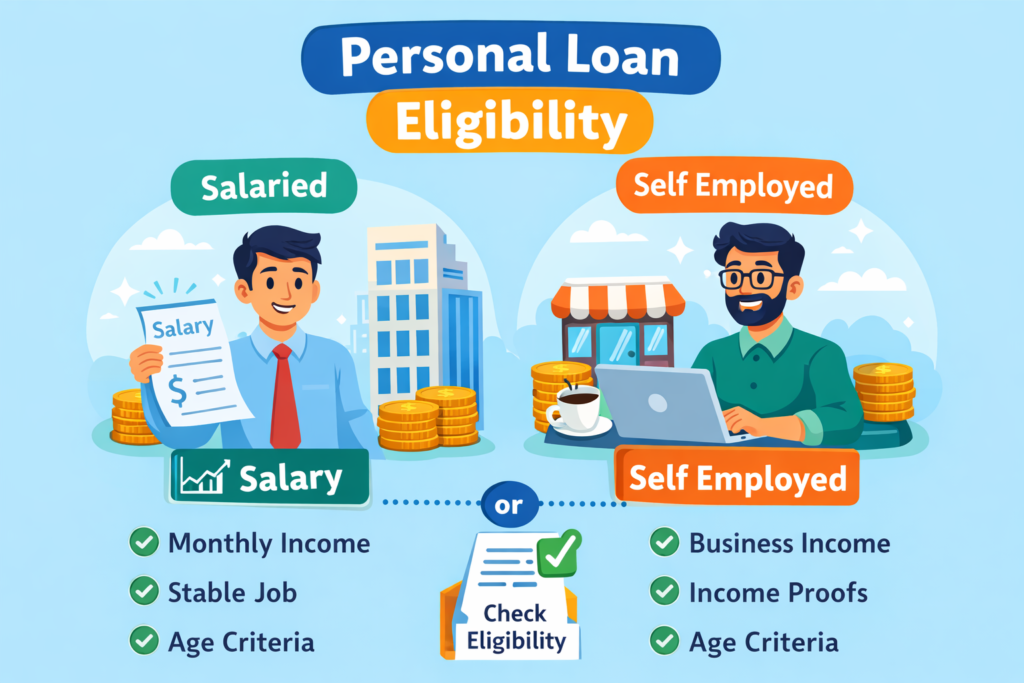
Personal loans are one of the most convenient financial tools available today. Whether you need funds for a medical emergency, wedding, travel, or debt consolidation, personal loans offer quick access to money without requiring collateral. However, eligibility criteria differ slightly for salaried and self-employed individuals. Understanding these requirements can help improve your chances of approval.
What is Personal Loan Eligibility?
Personal loan eligibility refers to the set of criteria that lenders use to evaluate whether a borrower can repay the loan. These criteria are based on income stability, creditworthiness, and financial behavior.
Key Eligibility Factors (Common for All)
Before diving into specific categories, here are the general factors lenders consider:
- Age: Typically between 21 and 60–65 years
- Credit Score: Usually 700 or above is preferred
- Income Stability: Consistent income source
- Employment/Business Stability: Minimum work experience or business continuity
- Debt-to-Income Ratio: Lower ratio increases approval chances
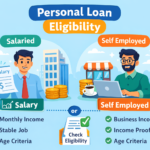
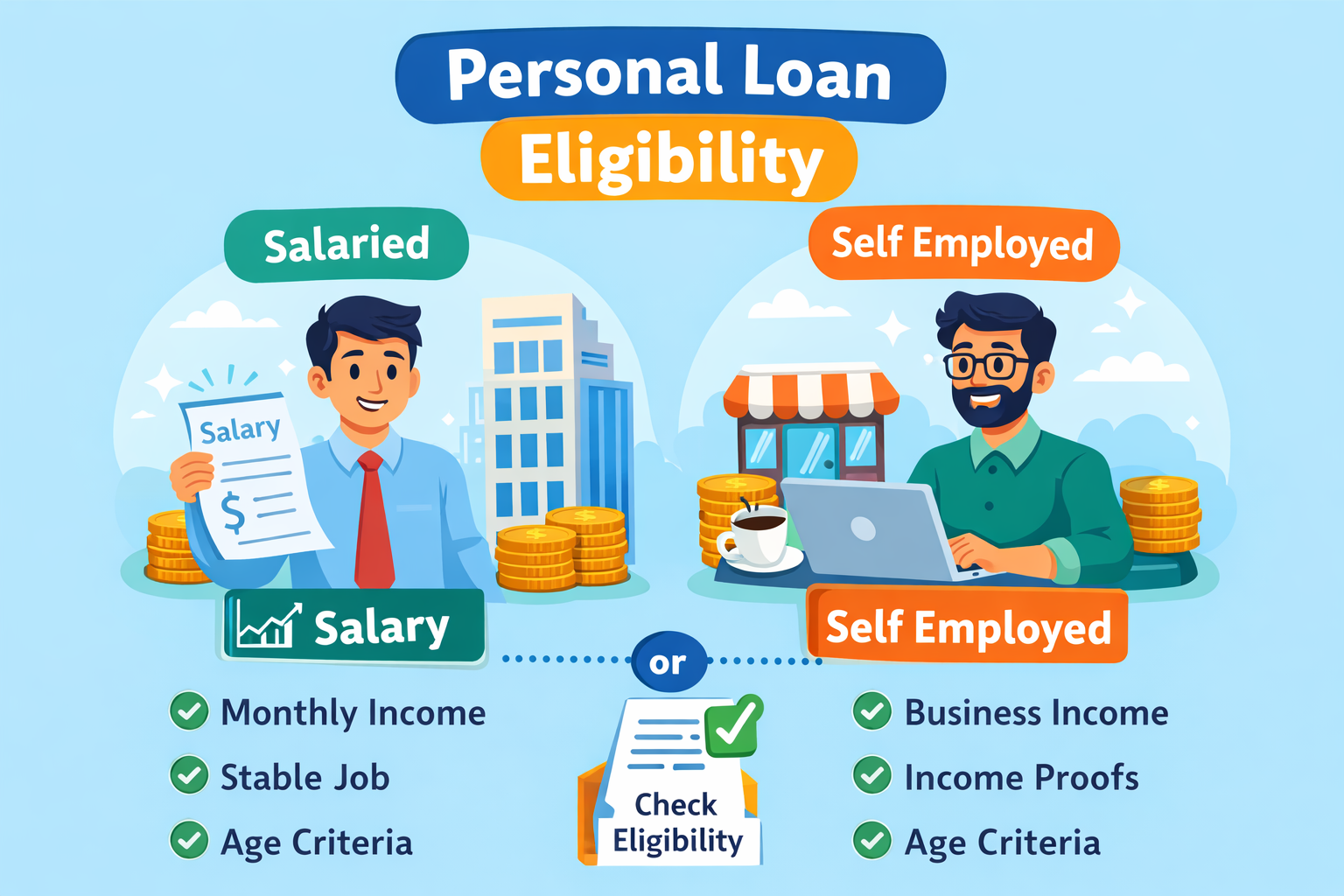
Eligibility Criteria for Salaried Individuals
Salaried applicants are often preferred by lenders due to stable income. Here’s what matters:
1. Employment Status
- Must be employed with a reputed company (private, public, or government)
- Minimum 6–12 months of work experience
2. Monthly Income
- Minimum salary requirement varies (₹15,000–₹25,000 depending on city and lender)
3. Work Experience
- Total experience of 1–2 years is usually preferred
4. Credit Score
- A score above 700 improves chances of approval and better interest rates
5. Employer Profile
- Working with recognized organizations may increase credibility
Eligibility Criteria for Self-Employed Individuals
Self-employed applicants undergo a slightly stricter evaluation due to variable income.
1. Business Stability
- Business should be operational for at least 2–3 years
2. Income Proof
- Consistent income reflected through ITR (Income Tax Returns) for the last 2–3 years
3. Annual Turnover
- Minimum turnover requirement depends on lender policies
4. Credit Score
- Similar to salaried individuals, 700+ is preferred
5. Business Type
- Professionals (doctors, CA, architects) and established businesses have higher approval chances
Documents Required
For Salaried Individuals:
- Identity proof (Aadhaar, PAN)
- Address proof
- Salary slips (last 3–6 months)
- Bank statements
- Form 16
For Self-Employed Individuals:
- Identity and address proof
- Business proof (registration/license)
- ITR for last 2–3 years
- Bank statements
- Financial statements (profit & loss, balance sheet)
Tips to Improve Personal Loan Eligibility
- Maintain a high credit score
- Avoid multiple loan applications simultaneously
- Keep your debt-to-income ratio low
- Ensure accurate documentation
- Build a stable income history
Conclusion
While both salaried and self-employed individuals can easily access personal loans, the eligibility criteria differ mainly in terms of income stability and documentation. Salaried individuals benefit from steady income, whereas self-employed applicants need to demonstrate consistent business performance.
Understanding these requirements beforehand not only improves approval chances but also helps secure better loan terms.